INDUSTRY:
Blockchain
CLIENT:
Stacks
YEAR:
2025
EXPERIENCE:
Product Design
Slean
about.
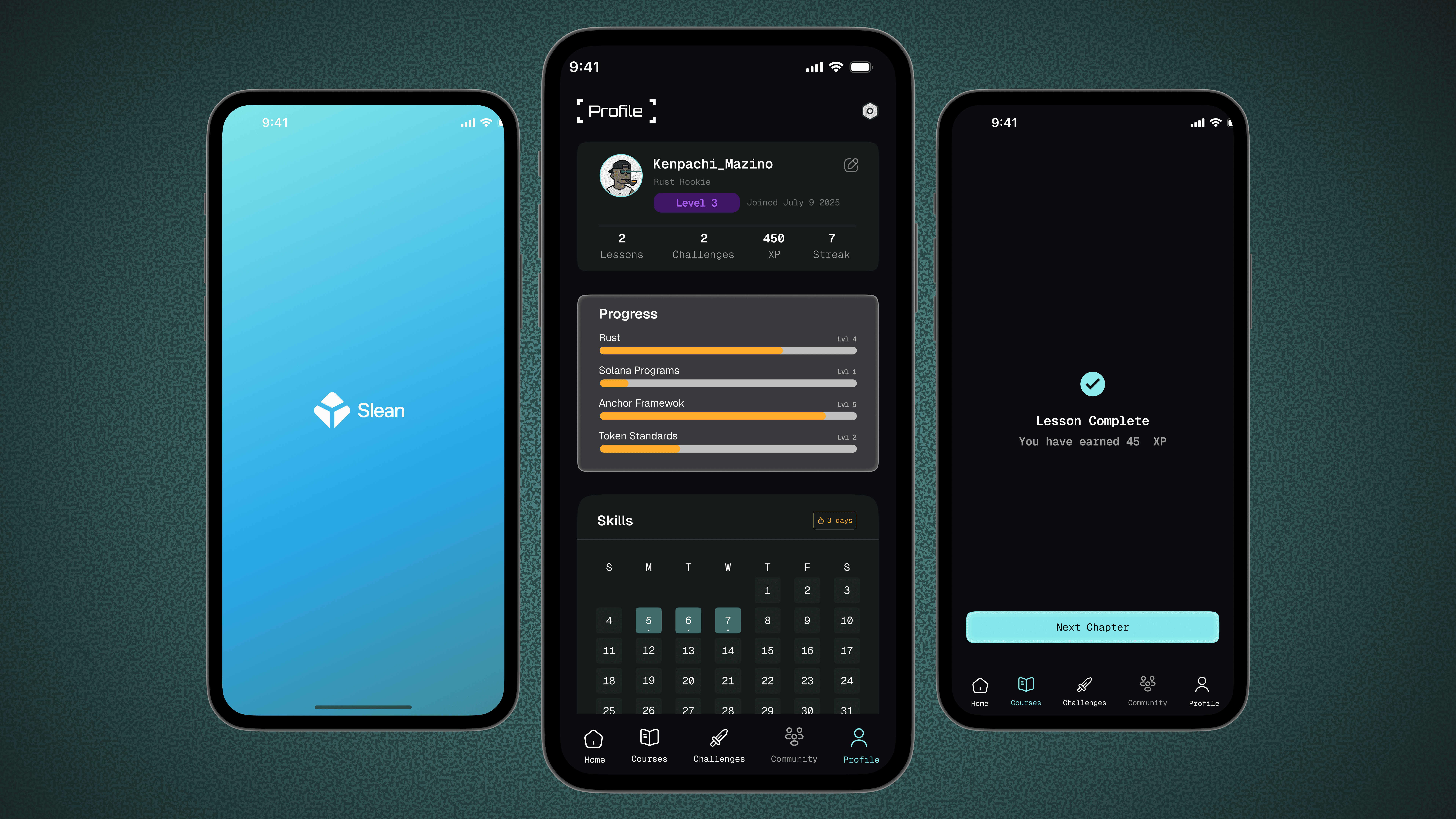
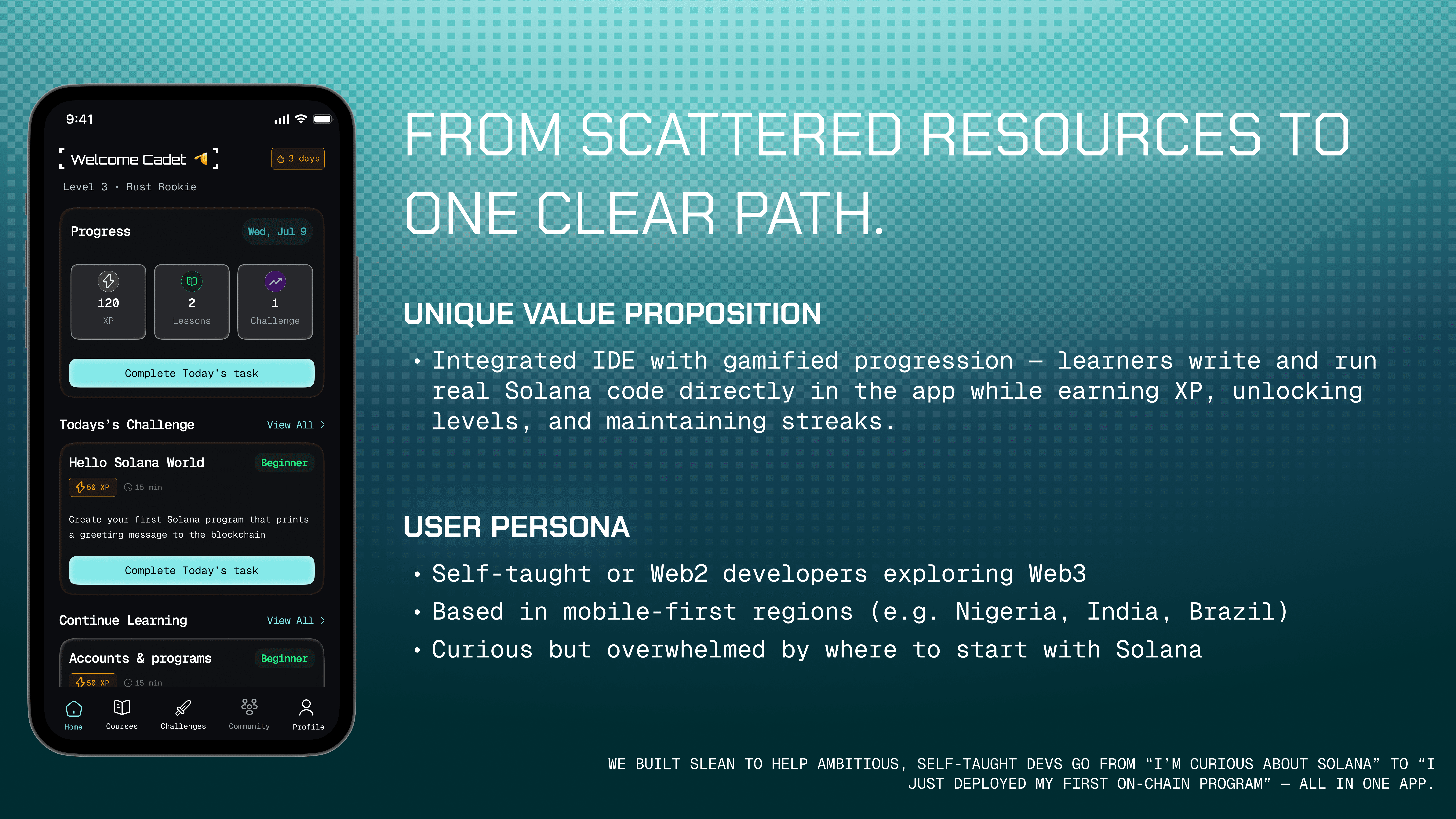
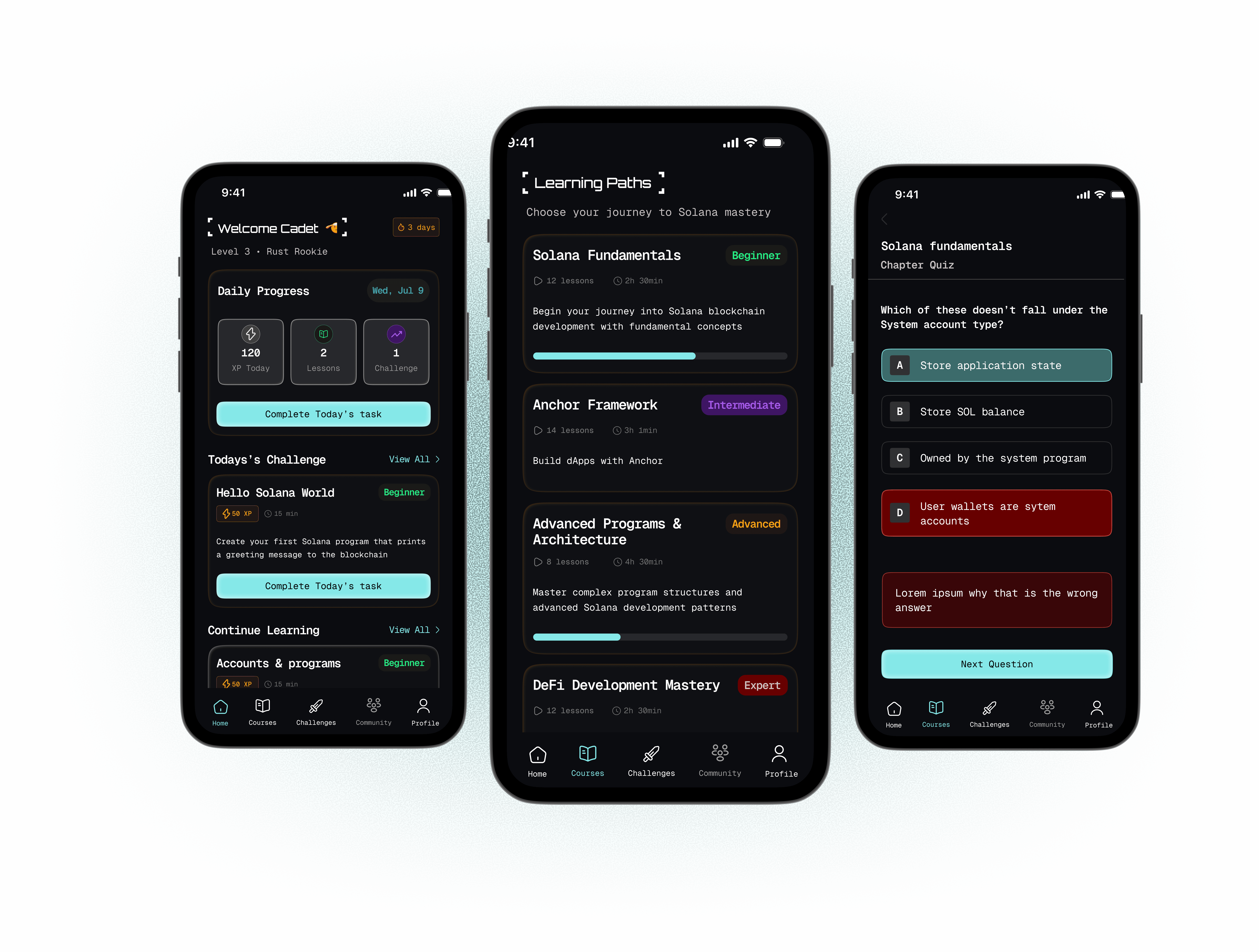
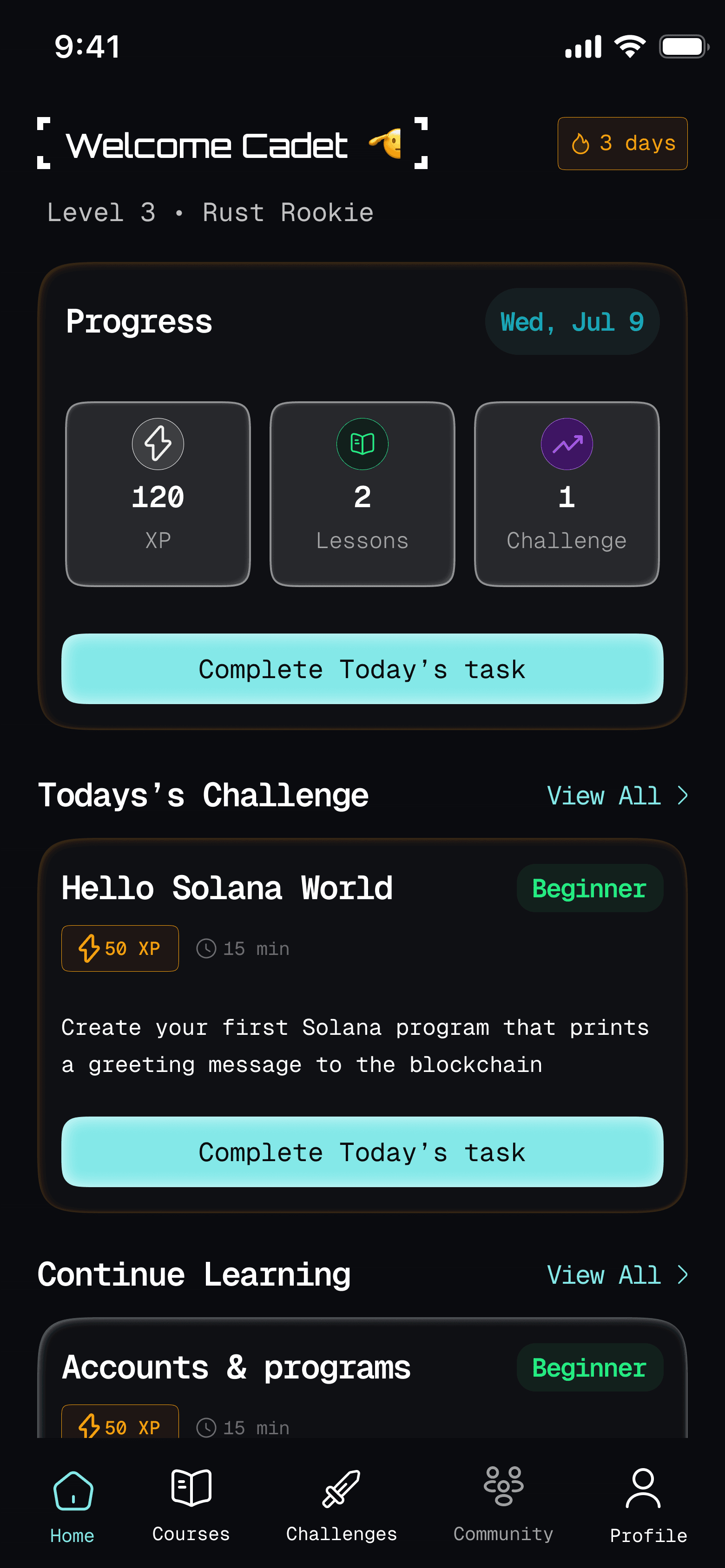
Slean is a mobile-native gamified learning platform specifically designed for developers interested in mastering Solana blockchain development. Through interactive challenges, progressive skill-building, and gamification mechanics, Slean transforms complex blockchain concepts into engaging, bite-sized learning experiences.

Balance Gamification with Learning
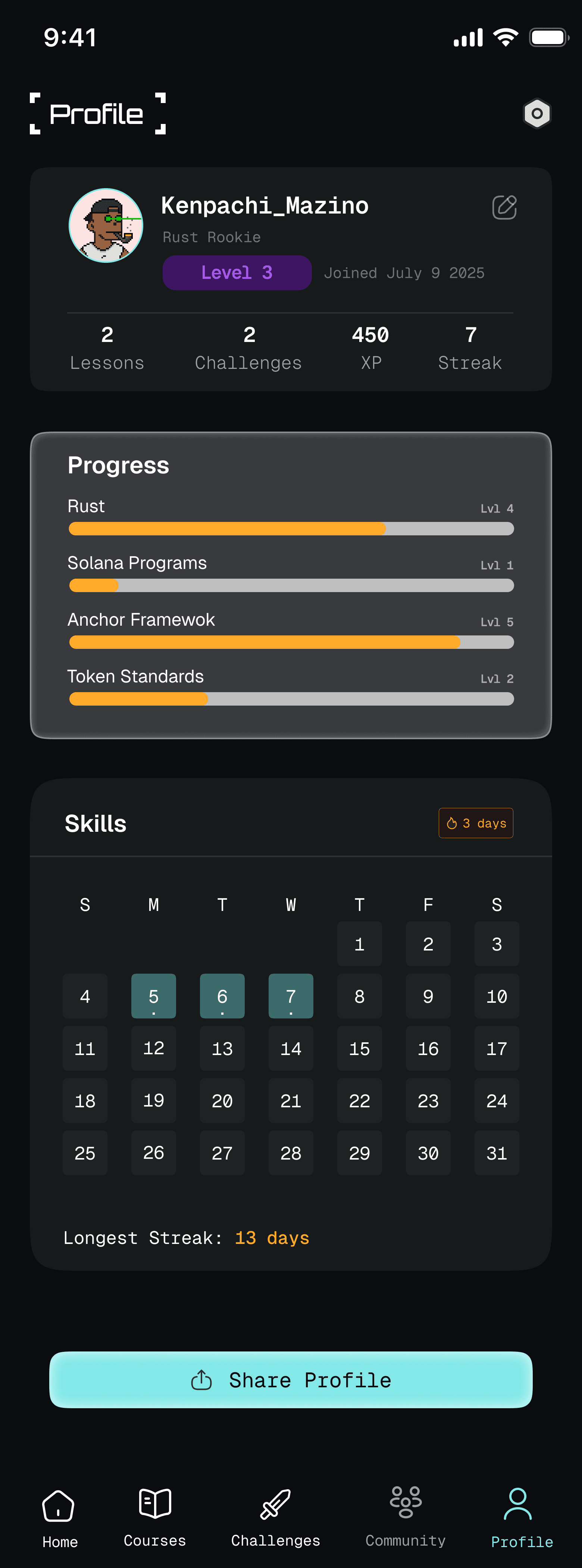
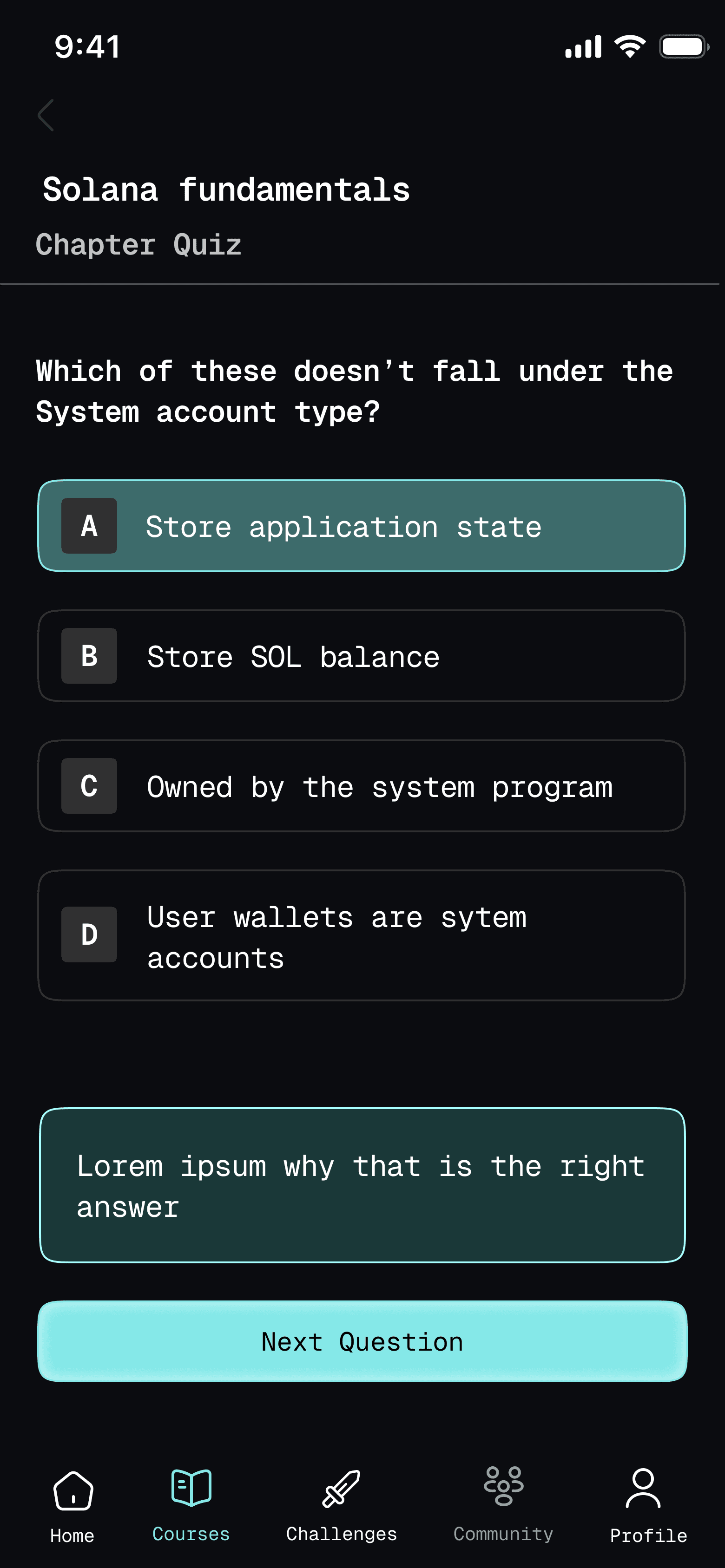
One major tension in designing Slean was this: gamification tends to pull in one direction—making learning feel delightful, game-like, full of rewards, quick wins, badges, leaderboards. But Solana development is complex: mastering Rust, understanding Solana’s account model, transaction fees, security issues, deploying to testnet, debugging. If the design leans too heavily toward superficial gamified rewards, learners may focus on collecting badges or finishing tasks fast, without really understanding the hard technical parts. On the flip side, if the content is too dry, overly formal, or strictly theoretical, learners lose motivation and drop off.
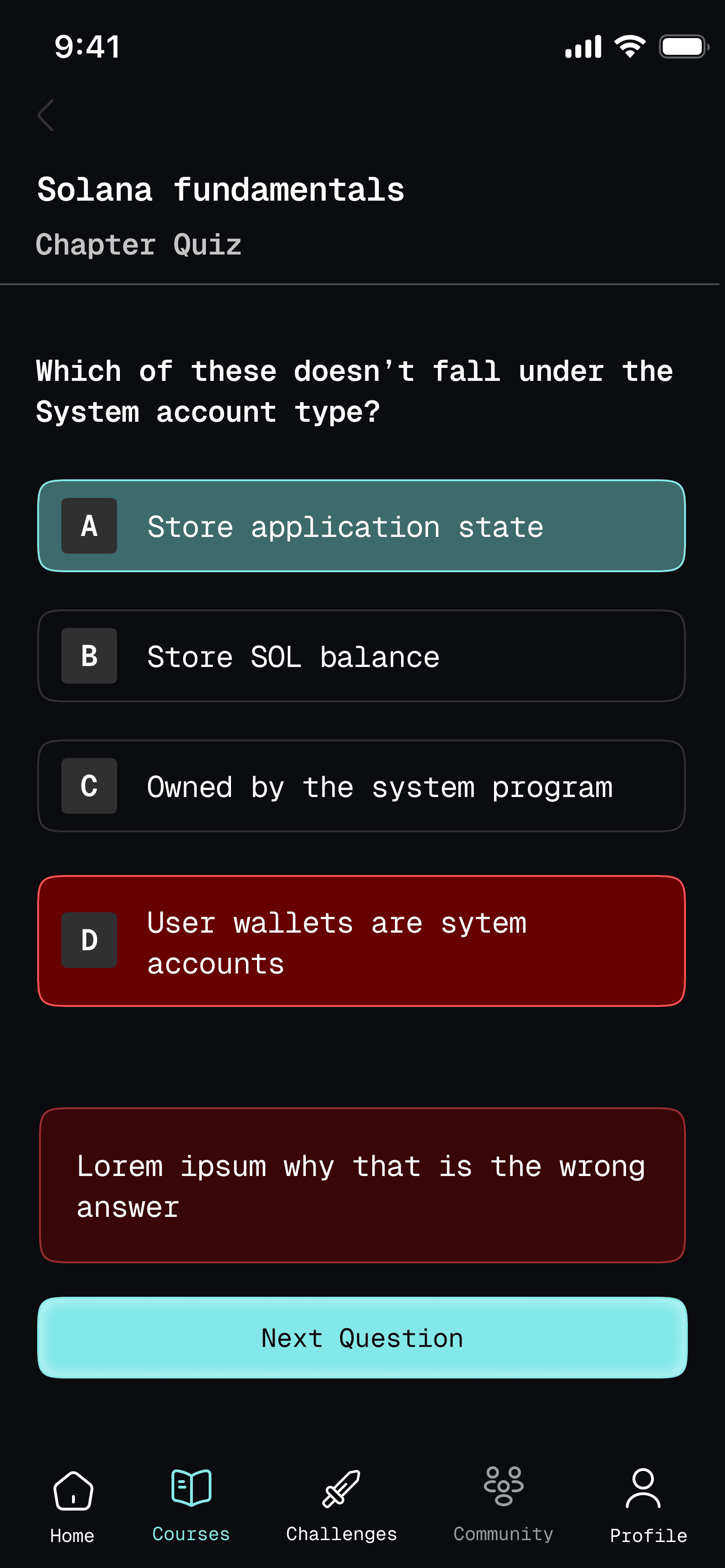
What Slean Achieved by Striking the Balance
By combining layered core learning, optional quests, real deployments, adaptive branching, and human feedback, Slean achieved the following:
Higher mastery and deeper learning: Users who completed the core modules plus bonus quests showed significantly fewer errors in deployments and better understanding of Solana’s transaction model and account model, compared to those who only followed core content.
Improved learner confidence: After peer/mentor review of projects, many learners reported greater confidence in writing secure Solana programs, debugging smart contracts, and deploying to testnet-level environments.
Better retention / fewer drop-offs: The adaptive difficulty and branching paths meant more users stayed on the platform past early modules. The availability of side-quests and real tasks gave users new goals, so fewer churned once rudimentary content was completed.
More engaged practice: Real deploys, sandboxed environments, and human feedback encouraged learners to experiment more (e.g. debugging failures, iterating code) instead of rushing through quizzes. This increased time on task.
Stronger peer / community interaction: Peer reviews, mentor feedback, and social features (badges, achievements visible) fostered a community where users helped one another; this further reinforced learning and retention.